У вас большие запросы!
Точнее, от вашего браузера их поступает слишком много, и сервер VK забил тревогу.
Эта страница была загружена по HTTP, вместо безопасного HTTPS, а значит телепортации обратно не будет.
Обратитесь в поддержку сервиса.
Вы отключили сохранение Cookies, а они нужны, чтобы решить проблему.
Почему-то страница не получила всех данных, а без них она не работает.
Обратитесь в поддержку сервиса.
Вы вернётесь на предыдущую страницу через 5 секунд.
Вернуться назад
Voltage: What are DC and AC Voltage?
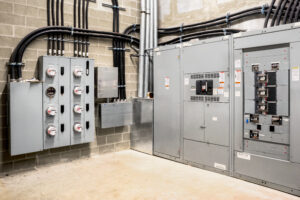
Voltage is a fundamental unit of electricity, and it is essential to understand how voltage affects various electrical systems, especially for facility managers in charge of large commercial buildings. Voltage measures the electrical potential difference between two points in an electrical circuit. In this blog, we will explore what DC and AC voltage are, how they are used, and how energy management systems can prevent voltage imbalances with main load metering.
What are VDC and VAC Voltage?
VDC (Volts Direct Current) is the voltage of a direct current (DC) circuit. Direct current is a type of electrical current that flows in one direction only. Unlike alternating current (AC), which changes direction periodically, DC current flows in a constant direction. VDC is measured in volts and is used to power various electrical devices, such as batteries, electronic circuits, and motors. DC voltage can be generated by batteries, power supplies, and solar cells.
VAC (Volts Alternating Current) is a measure of the strength of the alternating electric field that drives the flow of electrons in AC electrical systems. Unlike DC (Direct Current) voltage, which remains constant, VAC fluctuates sinusoidally, reversing direction periodically at a fixed frequency, typically 50 or 60 Hertz. The peak voltage of an AC waveform is measured in volts and is the maximum voltage that can be achieved during each cycle. In AC electrical systems, VAC is controlled using transformers, which can step up or step down the voltage to suit the needs of different applications.
VDC Versus VAC
The main difference between DC (Direct Current) and AC (Alternating Current) power lies in the direction of the flow of electrons. In DC applications current flows in one direction only, from the positive terminal to the negative terminal, while AC power changes direction periodically, typically at a frequency of 50 or 60 hertz. Another significant difference is that DC power has a constant voltage and current, while AC power varies both in voltage and current over time. DC power is commonly used in electronic devices, batteries, and automobiles, while AC power is used in HVAC systems, refrigeration systems, and commercial building lighting. Understanding the differences between DC and AC power is essential for facility and building managers.
How is DC Voltage Used?
VDC (Volts Direct Current) is a critical parameter in many applications involving solar power, battery power, and EV fast chargers. In solar power systems, VDC is used to match the output voltage of solar panels to the input voltage of inverters that convert DC power into AC power. In battery power applications, VDC determines the amount of power that can be drawn from batteries and how fast they can be charged. In EV fast chargers, VDC is used to convert AC power from the grid to DC power for charging electric vehicles quickly. Higher voltage DC power can reduce charging times significantly and are critical for supporting the rapid growth of EV adoption. In all these applications, VDC plays a vital role in ensuring efficient and reliable power delivery.
How Voltage Imbalances Can Negatively Affect Commercial Buildings
Systems such as commercial HVAC use a significant amount of electricity to regulate the temperature and air quality in large commercial buildings. These systems are critical for maintaining comfortable working conditions for employees and customers and keeping equipment in good working order. However, if the voltage supplied to the HVAC system is not stable or balanced, it can negatively affect the system’s performance and lifespan.
When the VAC voltage supplied to the HVAC system is too high or too low, it can cause the system to operate inefficiently or even fail altogether. For example, if the voltage is too low, the system may not be able to start, or it may run slower than normal. Conversely, if the voltage is too high, it can cause windings in motors to overheat or lead to premature failure of mechanical equipment.
If the main load voltage is not well-balanced, that means the utility may be supplying the building with dirty power.
What Causes Voltage Imbalances?
Dirty power, also known as electrical noise or electromagnetic interference (EMI), refers to the presence of unwanted electrical signals in the power supply. These signals can cause voltage and current waveforms to become distorted, resulting in voltage imbalances. This occurs because dirty power can generate additional frequencies that deviate from the fundamental frequency of the power supply. These frequencies can cause the voltage to fluctuate, resulting in an imbalance across the three phases of voltage supplied to the building’s assets. Additionally, dirty power can cause overheating, malfunctioning, or damage to electronic equipment, which can lead to safety hazards and increased costs. It is important to maintain clean power to ensure efficient and safe operation of electrical systems.
A utility company may inadvertently provide dirty power due to a variety of factors, including equipment malfunctions, faulty wiring, and inadequate maintenance. Additionally, the presence of heavy electrical loads, such as those in industrial areas, can cause voltage fluctuations and distortions in the power supply.
How Energy Management Systems Can Prevent Problems with Voltage Imbalances.
Energy management systems (EMS) can help prevent voltage imbalances by monitoring the electrical supply to the HVAC system and other equipment. EMS systems use main load metering to monitor the amount of energy consumed by the equipment and identify any voltage imbalances that may be present.
Main load metering involves measuring the total energy consumption of the HVAC system and other equipment in real-time. This information is then analyzed to identify any voltage imbalances that may be present, and corrective measures can be taken to balance the voltage supply.
EMS systems can also help prevent voltage imbalances by identifying areas where energy consumption can be reduced, such as by optimizing fast EV chargers and reducing energy waste. By reducing energy consumption, EMS systems can help balance the voltage supply and prolong the lifespan of the equipment.
VDC and VAC are essential units of electricity that power various electrical devices, including commercial HVAC systems. However, if the voltage supply is not stable or balanced, it can negatively affect the performance and lifespan of the equipment. Dirty power and voltage imbalances can cause a range of problems, including increased energy consumption and higher operating costs. Energy management systems can help prevent voltage imbalances by monitoring VDC and VAC of commercial buildings.

Jack French holds a leadership role at Gridpoint developing the Site Acceptance and Proactive Monitoring teams. His experience spans multiple disciplines including data validation, advanced analytics, measurement & verification, customer engagement, and control optimization.
У вас большие запросы!
Точнее, от вашего браузера их поступает слишком много, и сервер VK забил тревогу.
Эта страница была загружена по HTTP, вместо безопасного HTTPS, а значит телепортации обратно не будет.
Обратитесь в поддержку сервиса.
Вы отключили сохранение Cookies, а они нужны, чтобы решить проблему.
Почему-то страница не получила всех данных, а без них она не работает.
Обратитесь в поддержку сервиса.
Вы вернётесь на предыдущую страницу через 5 секунд.
Вернуться назад
VDC vs. VAC: Types Of Electric Current

Are you aware of the direction in which the Current is flowing? There are two ways electricity moves; Volts Direct Current (VDC) and Volts Alternating Current (VAC). As an electrician, you must know about VDC vs. VAC.
Electricity always flows in a particular direction in a VDC system, similar to how a river runs. As an illustration, consider the flow of electricity produced by batteries, solar cells, etc. VAC is a technique where the positive and negative sides rotate regularly and the flow of current changes as a result.
This is the electricity that comes from a generator or a plug-in. Additionally, alternating current is used to carry electricity produced by power plants and delivered to homes.
In this article, you will know what VDC and VAC are, the difference between VDC and DC, and a complete comparison of VDC vs. VAC. Read on!
Table of Contents
What are VDC and VAC?
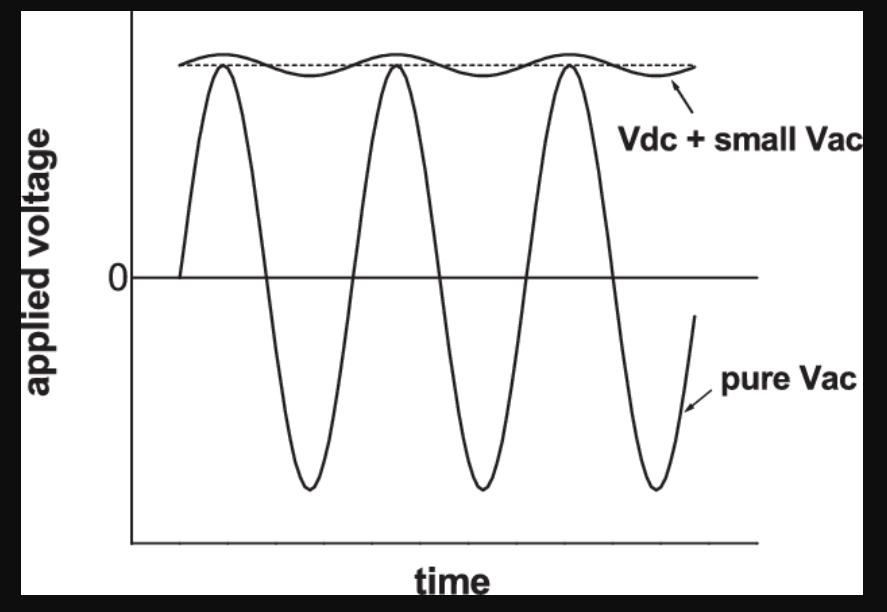
In comparison to VDC vs. VAC, volts of direct Current (VDC), also referred to as volts of direct current, can be produced by a battery or a power source that transforms alternating Current (AC) into direct Current (DC).
The voltage level is constant, and the waves only go in one direction from the wires. DC voltage generation is a relatively easy and straightforward process. A rotating coil produces a voltage in a magnetic field.
The splitter ring and commutator that make up the coil transform alternating electricity into direct voltage. DC’s steadiness is undoubtedly one of its most significant benefits. Much electrical equipment uses DC.
Positive and negative terminals regularly alternate using this technique known as voltage alternating Current (VAC). The current flow changes as a result. Alternating Current is induced in the coil when the conductor that is carrying the current spins in the magnetic field.
The magnetic flux is reduced as the conductor rotates, and the fluctuating flux results in alternating voltage in the conductor. VAC is the voltage applied by a generator or plug-in. Additionally, it serves as an alternating current to distribute electricity produced by power plants to residences.
Is there a Difference between VDC and DC?

The simple answer is yes.
Direct current = DC
Volts Direct Current = VDC
The movement of electrons is referred to as direct Current or DC. Direct current is also known as DC, and VDC stands for volts, Direct Current. VDC is the term for the voltage in a DC circuit. Electrons travel in a DC circuit from the negative terminal to the positive terminal. Here, the path is never altered.
For instance, in the sentence 40 Amp AC/DC, you should understand that the number 40 represents the measurement of Current in AC or DC amperes.

- The voltage that generates direct current is referred to as VDC, whereas the voltage that produces alternating current is referred to as VAC.
- While VDC moves in both directions, VAC only moves in one direction.
- The generator produces VAC, and VDC is derived from the battery.
- While the polarity of VAC never changes over time, VDC is always consistent.
- While VDC voltage frequency is zero, VAC frequency varies by nation; primarily, 50 and 60 Hz are utilized.
- While the power factor for VAC might range from 0 to 1, it is always 1 for VDC.
- While VDC does not require phase or neutral, VAC has both.
- While VDC transmission does not require the transformer, VAC transmission must.
- While VDC lacks amplitude, VAC does. The most immense distance traveled by an oscillating or vibrating body is referred to as its amplitude.
- When compared to VDC, VAC has a higher efficiency.
- For VAC, impedance is the neutral characteristic, whereas, for VDC, it is resistance. Impedance is the term for a voltage’s opposition to the current flow.
- Signal amplification is the process of making the signal stronger. The primary benefit of VAC is that it is simple to assess. The ability to readily amplify voltage is a benefit of VDC.
VDC vs VAC
RNelson Multimeter VAC & VDC Settings
How To Calculate VDC From VAC?
To determine VDC using VAC, you can use the formula below.
From the AC voltage, we may derive VDC, the DC voltage.
VAC means full alternating current voltage.
By multiplying VAC by.636, you may determine VDC using VAC.
First, determine the total AC voltage.
In this example, the total AC voltage is measured as 120.
Finally, calculate VDC from AC voltage using the formula above:
Adding the above values to the equation results in the following:
VDC= 120∗.636 = 76.32
FAQ.
Are DC and VDC the same?
No, volts of direct Current (VDC) are electrical units produced by batteries or electrical sources that change alternating Current (AC) into DC. Direct Current, or DC, is the term used to describe the flow of electrons.
A DC circuit’s voltage is known as VDC. In a DC circuit, electrons move from the negative to the positive terminal. The road never changes in this place.
Are VAC and Voltage the same?
The direct current voltage is referred to as VDC. So, yes, it is voltage, but it is the only kind that does not switch between positive and negative states.
24 VDC to VAC
24VDC is converted to 24VAC via a cheap DC/AC power inverter that is lightweight and tiny. Enables the use of 24 VAC equipment in setups with 24 VDC. Solar or battery backup systems are compatible with the DC to AC inverter.
Can You Use a VAC switch for DC?
Not generally. Switches commonly come in AC, VDC, and current ratings. In general, AC ratings are more fantastic than DC ratings. Therefore, if a button doesn’t have a DC rating, it shouldn’t be utilized with DC.